Deep Sleep Color Palettes: Navy and Grey Bedroom Design
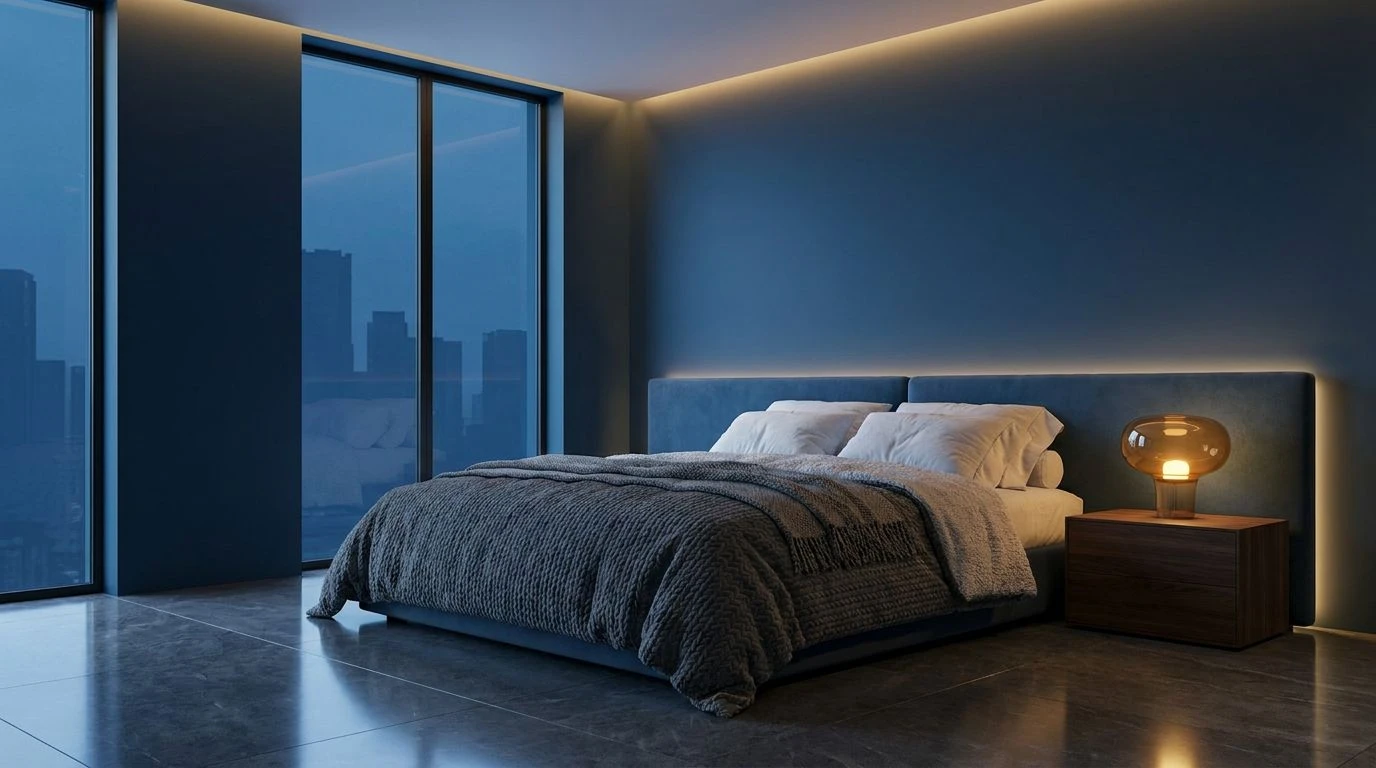
· 5 min readHuman vision adapted under the dictation of the sun, making our brains acutely responsive to the shifting spectrum of light. As daylight fades, the visual system detects the retreating presence of bright, high-frequency wavelengths, signaling the pineal gland to prepare for rest. It is here, in the optical transition toward darkness, that profound neurological shifts occur. Surrounding ourselves with deep, absorbing blues creates a visual environment that mimics the protective canopy of a moonless night. This particular shade of midnight acts as an optical cue for slowing heart rates and lowering cortisol. Paired with muted, low-reflectance greys, these deeply saturated naval tones strip away visual noise, allowing the overstimulated mind to detach from waking stress and drift effortlessly toward the restorative phases of sleep.
Twilight Transition 🌙
The visual journey toward unconsciousness often requires a gradual stepping down of sensory input rather than an abrupt plunge into darkness. This collection captures that biological wind-down process by moving the eye from the residual warmth of Hearth Ember to the cooling wavelengths of Dusk Sky. When seeking the profound rest associated with deep marine blues, it becomes necessary to surround those vast, dark expanses with transitional anchors. Slumber Grey provides a neutral resting ground that prevents stark contrast, a known trigger for visual arousal. Meanwhile, Dream State Purple introduces a short-wavelength calmness that encourages the mind to release its waking vigilance. By mimicking the atmospheric scattering of light right after sunset, this color sequence lowers cognitive load, gently guiding the central nervous system toward a state of profound relaxation.
Circadian Drift 🌊
Sensory deprivation is a powerful tool for regulating the sleep-wake cycle, and color can function as a form of optical quietness. Here, the presence of Deep Oceanic Blue serves as a grounding anchor, absorbing excess ambient light and creating an illusion of boundless, dark space. Surrounding this intense shade with low-chroma neighbors like Foggy Ash and Cloud Pillows minimizes light bounce within a room. When the retina registers these muted, earthy tones, it sends signals of environmental stability to the brain. Charcoal Shadow acts as a transitional border, softening the edge between the absorbing navy and the lighter neutrals. This careful modulation of contrast prevents sudden optic nerve stimulation. The resulting atmosphere mimics a sheltered coastal night, signaling our ancient biological rhythms that it is safe to lower our defenses and enter the most restful, slow-wave stages of slumber.
Melatonin Sunset 🌇
The transition from wakefulness to rest is heavily governed by the shifting color temperature of our environment. Biological clocks rely on the disappearance of bright, energetic wavelengths to initiate the production of sleep hormones. The sharp presence of Solar Flare and Fading Horizon represents the final burst of daylight, a necessary physiological marker that the day is ending. These energetic tones are swiftly consumed by the vast, light-absorbing properties of Abyssal Navy and Stormy Evening. This dramatic shift from high thermal visibility to cool, expanding darkness reflects the natural progression of twilight. Cool Slate serves as a perceptual bridge, ensuring the visual cortex is not startled by an immediate plunge into shadow. Surrounding oneself with these cooling, recessive shades signals the hypothalamus to reduce body temperature, a fundamental physiological requirement for achieving uninterrupted rest throughout the night.
Nocturnal Brainwaves 🧠
Neurological studies on visual perception reveal that certain specific wavelengths can directly influence our brainwave patterns. Theta Wave Blue and Total Eclipse dominate this spectrum, acting as visual sedatives that encourage the brain to transition from the rapid beta waves of waking life to the slower frequencies of deep rest. Interestingly, the introduction of Bioluminescent Orange and Electric Cyan provides necessary focal points that prevent the darker shades from feeling claustrophobic. Instead of a flat, suffocating darkness, these pinpoint colors create an experience akin to looking into a deep, starlit galaxy. Silver Lining and Graphite Night temper the vibrant accents, absorbing scattered light and maintaining a low overall luminance. This balanced visual diet of deep shadows and faint luminescent cues creates a spatial depth that relaxes the eye muscles, allowing the nervous system to completely disengage from the physical environment.
Hibernation Chamber 🐻
While expansive naval tones simulate the night sky, creating a feeling of safety also requires earthly grounding. Human psychology dictates that true relaxation only occurs in spaces perceived as secure and sheltered. The thermal warmth provided by Deep Mahogany and Muted Sand contrasts with the usual chilling effect of infinite nighttime blues. Stone Whisper acts as the crucial neutral agent, softening the visual transition between the heavy, dark base and the lighter Vanilla Linen. When placed near the deep, light-absorbing blues discussed earlier, these terrestrial pigments provide a psychological perimeter, a reassuring boundary against the endless dark. Golden Slumber adds a final touch of low-intensity warmth, reminiscent of a dying ember in a quiet room. This combination satisfies our ancient craving for a protected enclave, lowering the ambient stress hormones that so often interfere with the onset of rapid eye movement sleep.
The optical environment we construct around ourselves plays a profound role in dictating our physiological states. The targeted use of deep, light-absorbing blue tones effectively manipulates spatial perception, tricking the modern brain into recognizing the protective, calming signals of a primal night. When these vast expanses of dark color are carefully moderated by soft greys and muted earth tones, the visual cortex is relieved of the burden of processing high-contrast stimuli. This deliberate reduction in sensory data allows the nervous system to effortlessly wind down, paving the way for the body to repair itself through uninterrupted, restorative sleep.