Modern Forest Color Palettes for Restorative Home Design
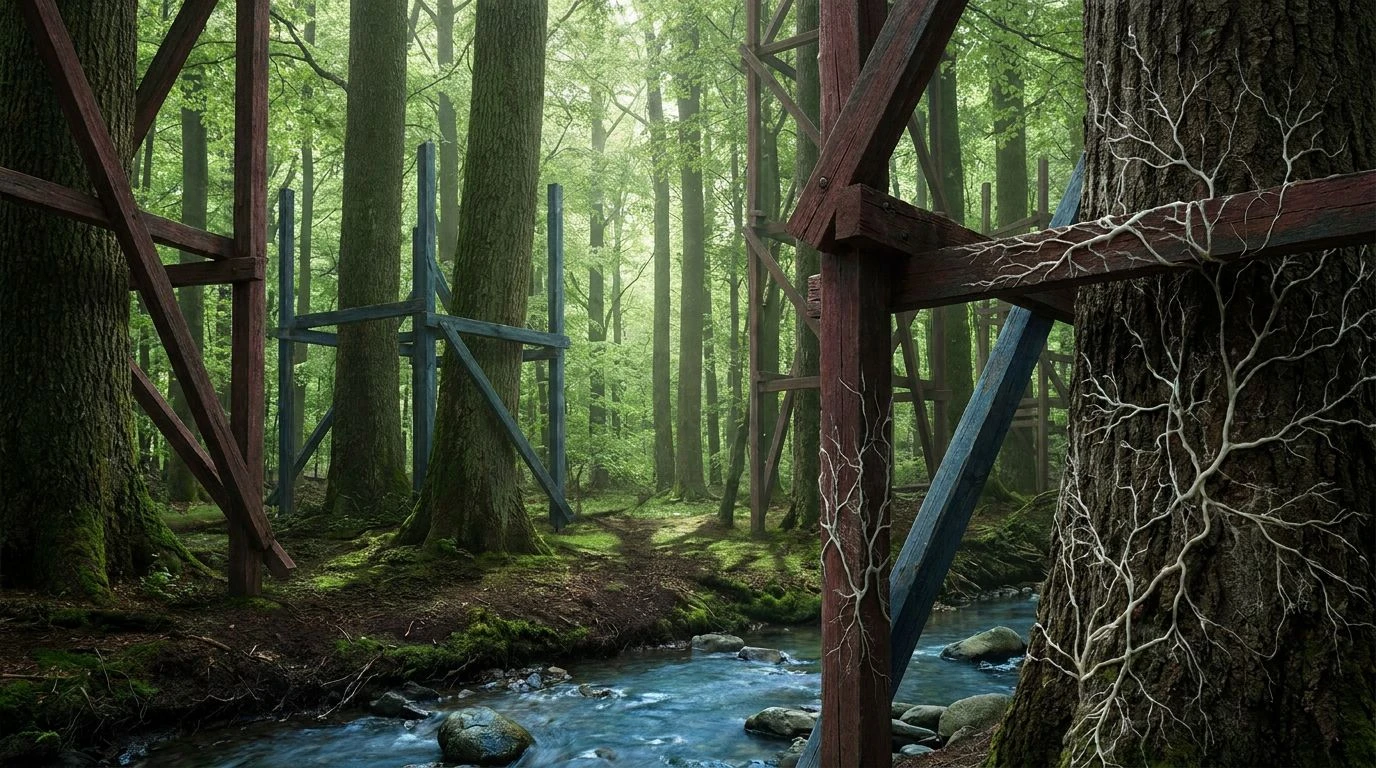
· 5 min readReimagining the modern woodland requires a shift in how we perceive the geometry and biology of nature. Rather than a chaotic overgrowth of green foliage, we can observe the forest as a biological scaffold, a system of supreme structural integrity rooted in rich earth and sculpted by the persistent flow of cold water. We process these environments through the deeply grounding presence of dark timber and the expansive, thermal coolness of mineral-rich currents. This shift in perception turns our visual attention toward the architecture of the biome. By studying how the eye measures these specific wavelengths, we understand how physical spaces can mirror the restorative effects of an old-growth habitat, creating precise environments that function like ecological sanctuaries for human rest, physical recovery, and communal gathering.
Twilight Canopy 🌌
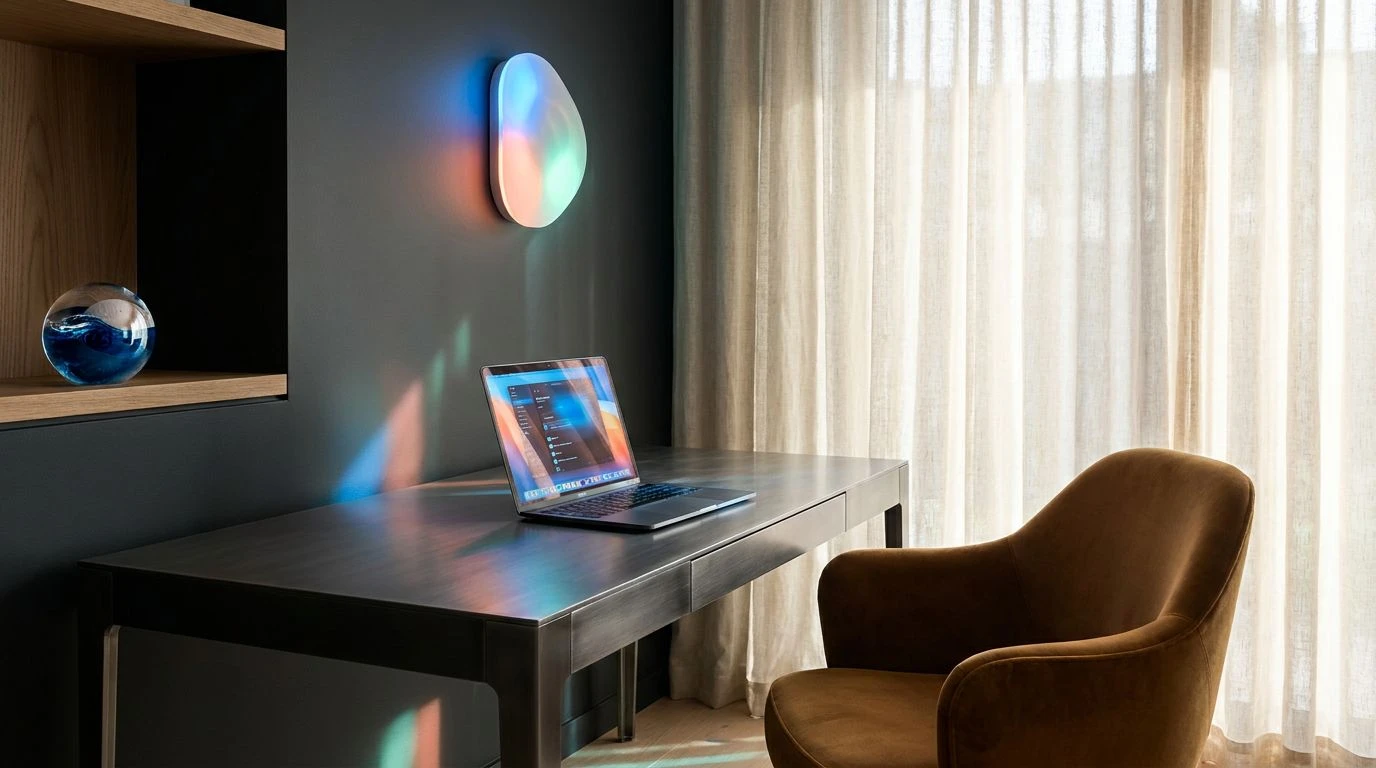
When light retreats from the forest floor, human vision shifts its sensitivity toward shorter wavelengths, a perceptual phenomenon known as the Purkinje effect that turns deep shadows into rich, atmospheric purples. This specific collection of tones captures the moments just after sunset, where the rigid bounds of the woodland blur into cool, atmospheric depth. Obsidian Void anchors the visual field, while Bioluminescent Lavender and Fogged Amethyst introduce a cooling, sensory deprivation effect mimicking the temperature drop of evening air. In a bedroom or a quiet communal resting area, these visual frequencies directly lower physiological arousal. The human nervous system interprets these specific wavelengths as signals of approaching night, encouraging a biological transition toward deep rest. It strips away the overwhelming stimuli of daylight, leaving behind a skeletal framework of quiet comfort and atmospheric stillness.
Thermal Woodscape 🪵
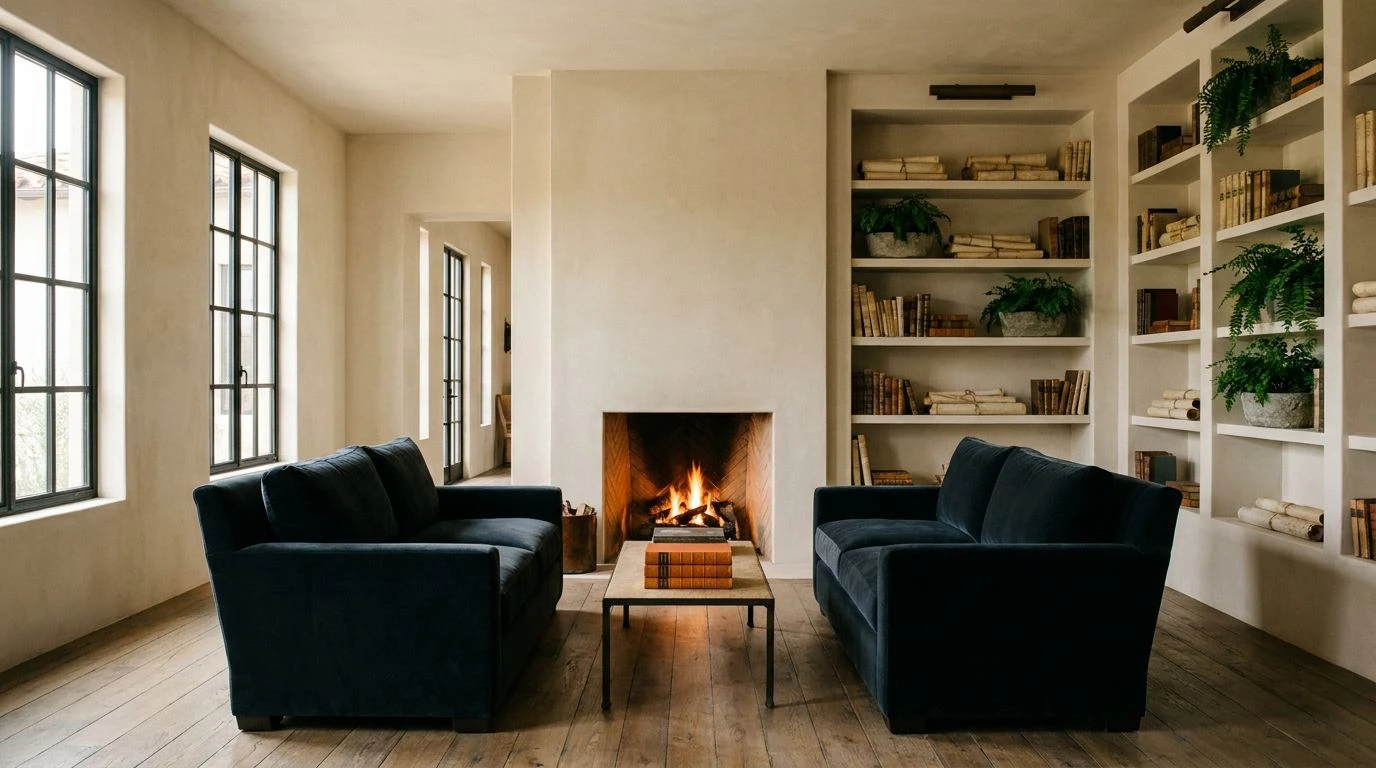
Visual processing relies heavily on temperature contrast to calculate spatial depth, a principle perfectly illustrated when warm timber tones meet the optical equivalent of chilled water. Deep Mahogany absorbs light, communicating density, gravity, and weight, while Glacial Slate reflects a cool, expansive energy that mimics frost or flowing streams. This specific tension between heavy, carbon-rich organics and light, aqueous blues defines structured organicism. It mirrors the biological reality of ancient trees pulling icy water from the earth. Applied to a spa or communal gathering space, this combination provides profound psychological nourishment. The rich, woody browns offer a feeling of terrestrial security, while the cool blue prevents the environment from feeling overly enclosed or stifling. Our brains process this contrast as an ideal habitat, one that offers both the thermal protection of dense bark and the life-sustaining clarity of fresh water.
Mineral Spring 💧
The geology beneath a woodland biome dictates its visible life, establishing a firm foundation built on compressed rock, fossilized resin, and deep underground aquifers. Here, the visual focus rests entirely on the raw, unyielding materials of earth and fluid dynamics. Subterranean Pool provides a stark, freezing blue that shocks the visual system with crisp clarity, while Amber Resin offers a concentrated burst of warmth, much like tree sap catching a stray beam of sunlight. The surrounding greys and off-whites mimic the physical properties of porous stone acting as a natural filtration system. For spaces designed around physical recovery, such as communal baths or therapeutic environments, this arrangement replicates the cleansing properties of an untouched mineral spring. The sharp divergence between the freezing blue and the warm gold creates a restorative psychological environment, prompting the mind to associate the space with purification, geological stability, and biological renewal.
Photosynthetic Architecture 🌿
Even when shifting focus away from lush surface foliage, the biological imperative of photosynthesis remains a structural reality of any woodland environment. This collection maps the cellular progression from deep, nutrient-dense earth to the pale, sun-seeking tips of new growth. Peat Soil and Chlorophyll Shadow provide a heavy, light-absorbing base that communicates the dense physical matter required to support tall arboreal structures. Bleached Mycelium acts as a neutral binding agent, representing the fungal networks that distribute nutrients beneath the surface. In an architectural setting, this spectrum provides a deeply grounding psychological effect. The presence of these specific greens triggers an ancient human association with fertile, life-sustaining environments. This predictable, orderly progression of light to dark green creates an atmosphere of communal safety, making it an excellent choice for spaces where groups gather to share food or seek shelter.
Canopy River Basin 🏞️
Biodiversity requires a broad spectrum of chemical and physical interactions, represented visually by a wide array of wavelengths bouncing off different ecological surfaces. This combination captures the vibrant, highly active edge of a forest where dense woodland meets a fast-flowing river. High Current Blue provides an active, kinetic energy that contrasts sharply with the stabilizing warmth of Heartwood Copper and Exposed Clay. The addition of bright yellow and green signals active biological productivity. When applied to communal spaces meant for active recovery or morning routines, this lively combination stimulates the visual cortex and promotes a feeling of wakeful vitality. It translates the raw, chaotic energy of an untamed riverbank into a structured, easily processed visual environment. The human mind interprets this variety as a sign of environmental abundance, making a room feel like a thriving, resource-rich habitat where a community can flourish and find constant nourishment.
Examining the natural world through its foundational physical properties rather than its surface foliage completely changes how we perceive our built environments. By balancing the thermal density of rich, woody tones with the sharp, kinetic clarity of cool aqueous shades, we construct spaces that speak directly to our biological needs. The human brain recognizes these environmental cues as reliable markers of safety, hydration, and shelter. Applying these specific visual frequencies to rooms designed for rest or communal gathering transforms basic architecture into a restorative habitat. Through a careful study of these structural relationships, modern spaces can replicate the deeply calming and grounding effects of a primeval woodland, offering a highly sophisticated approach to human well-being and daily nourishment.