Industrial Grey and Red Wine Color Palettes for Dining
· 5 min readThere is a certain theatre to modern dining that relies heavily on the tension between appetite and austerity. We have spent the better part of a decade trying to make our kitchens look like operating rooms, stripping them of anything resembling human appetite in favor of sterile white countertops and clinical lighting. But the pendulum swings, and the dining room is remembering its actual purpose: pleasure, preferably with a little mess. Pairing the deep, tannic bite of a heavy red wine with the unapologetic utility of industrial grey provides a visual shock to the system. It is a calculated collision between the sensual and the strictly functional. You get the warmth of a long-simmered ragu set against the cold indifference of exposed ductwork. This tension creates a culinary environment that feels genuinely adult, acknowledging that the best meals often happen in spaces that do not try too hard to be polite.
The Sommelier's Scaffold 🍷
The Sommelier's Scaffold presents a surprisingly domestic take on the industrial brief, pairing the rich depth of Crushed Garnet with the stark reality of Cast Iron. There is an immediate conversation happening here between the organic and the manufactured. Flambé adds a sudden jolt of heat, like a burner igniting in a dim restaurant kitchen, while Unbleached Linen offers a momentary place to rest the eye. Poured Concrete acts as the great equalizer, grounding the more theatrical reds in something entirely practical and unbothered. This combination thrives in a dining room that takes its food seriously but its decor lightly. You can easily picture heavy earthenware bowls sitting on a zinc-topped table, surrounded by walls that look just a bit weathered. The visual temperature shifts rapidly between hot and cold, mirroring the experience of drinking a robust vintage in a drafty, repurposed warehouse space.
Brutalist Trattoria 🍝
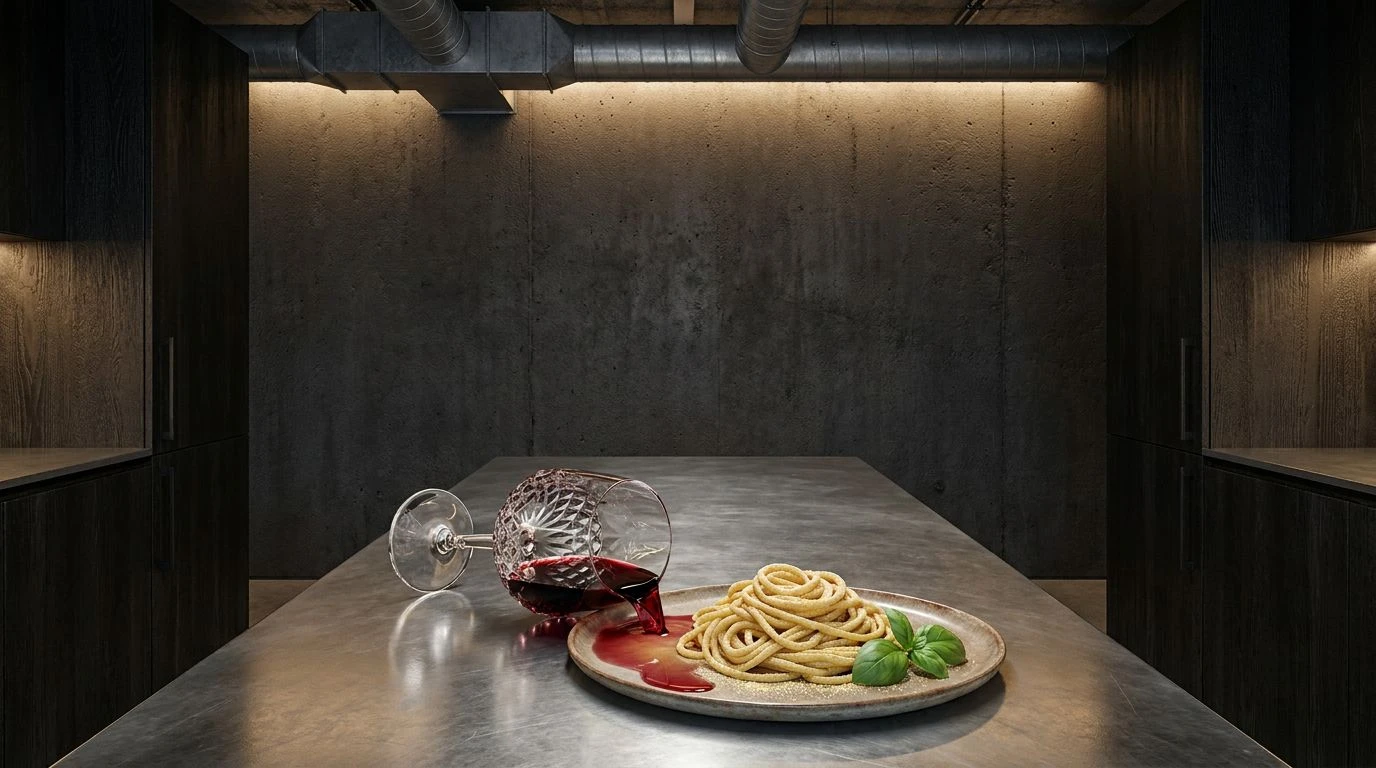
Stepping into a room styled with Brutalist Trattoria feels like walking into a remarkably confident pop-up restaurant located in a former garage. The unapologetic darkness of Soot provides a backdrop that makes Passata pop with alarming intensity. It is a high-contrast environment that demands attention. Charred Oak and Semolina introduce a carbohydrate-heavy comfort, grounding the sharp edges of the room in memories of baked goods and roasted vegetables. Yet, just as things threaten to become entirely too comfortable, Galvanized Steel and Ash pull the mood firmly back into the realm of the mechanical. A sudden flash of Basil Sprig prevents the entire affair from taking itself too seriously, adding a necessary punctuation mark of life to a room dominated by earth and metal. The resulting atmosphere is loud, energetic, and perfectly suited for a kitchen where actual cooking, complete with spills and shouting, takes place.
Tannin and Tarmac 🔪
Tannin and Tarmac offers a masterclass in restraint, proving that you do not need to cover a wall in bright paint to make a statement about appetite. Stiff Apron provides a clinical starting point, a blank canvas that immediately highlights the uncompromising depths of Studio Shadow. Against this monochromatic staging, Oxblood becomes the undisputed star of the show. It is the color of old leather booths in a venerable steakhouse, or the dregs of a particularly expensive Bordeaux left in a glass overnight. Brass Fitting adds a necessary touch of wealth, a glimmer of metallic heat that elevates the otherwise austere environment. Scuffed Aluminum keeps the metallic additions from looking overly polished or newly bought. This arrangement belongs in a serious, professional-grade kitchen, the kind where the appliances cost more than a small car and the chef demands total silence during service.
Midnight at the Abattoir 🥩
There is an undeniably carnivorous energy running through Midnight at the Abattoir, a collection of shades that feels aggressively alive and deliberately provocative. Fresh Cut provides a startling jolt of primary color, immediately tempered by the bruised, heavy presence of Coagulated Merlot. This is a pairing that speaks directly to the gut rather than the brain. Butcher's Block and Rendered Fat introduce a deeply savory quality to the room, wrapping the diners in shades that recall roasting meats and rich gravies. Greige Plaster serves as the unassuming architectural shell holding this feast together. The real surprise comes from the margins, where Juniper Berry and Cold Pipe inject a bracing, gin-like chill into the overwhelmingly warm environment. It creates a space that feels slightly dangerous but entirely magnetic, perfect for late-night dinner parties that stretch well past their expected end time.
Furnace and Factory 🏭
Furnace and Factory strips the culinary experience down to its absolute bare mechanics, focusing on the sheer physical process of applying heat to raw ingredients. Pitch serves as the vast, unknowable void of a hot oven, absorbing light and creating a sense of infinite depth. Sheet Metal stands as the functional counterpoint, a sterile surface ready to be scrubbed clean at the end of a gruelling shift. But the rigid industrial framework is entirely subverted by the sudden, spicy warmth of Smoked Paprika and Rusted Casing. These are colors that smell like smoked salts and dried chilies, bringing an unexpected agricultural roughness to the urban grey. Clarified Butter acts as the final luxurious touch, a slick of golden fat that enriches the severe surroundings. This approach turns a dining area into a working laboratory of flavor, celebrating the grime and the glory of actual, unpretentious cooking.
These collections of color prove that the dining room no longer needs to rely on safe, appetizing pastels or polite neutrals to make guests feel welcome. By slamming the rich, intoxicating shades of the vineyard and the butcher shop against the unforgiving textures of a factory floor, we get spaces that feel incredibly honest. They celebrate the messy, visceral reality of preparing and consuming food. The resulting environments are not just places to eat a meal; they are theatrical sets for the nightly performance of dinner, where the bitter tannins of a good vintage are matched perfectly by the visual weight of concrete and steel.