Industrial Brown Color Palettes for Sustainable Design
· 6 min readFor too long, the visual language of ethical clothing has hidden behind a veil of spotless white. This sterile aesthetic sells a dream of purity, yet it erases the sweat, the soil, and the literal grinding of gears required to make clothing in a way that respects the earth. True environmental responsibility is not a delicate, untouched thing. It is dirt beneath the fingernails. It is heavy machinery running on alternative power, rough fibers spun on massive looms, and hands calloused from real labor. Shifting our gaze toward earthy brown and raw cream forces an acknowledgment of this physical reality. These shades ground the narrative in the dirt from which natural textiles grow. They speak of a sophisticated industrial space where nature and machinery exist in tension, honoring the honest, unpolished labor required to dress the world without destroying it.
Factory Floor Flora 🏭
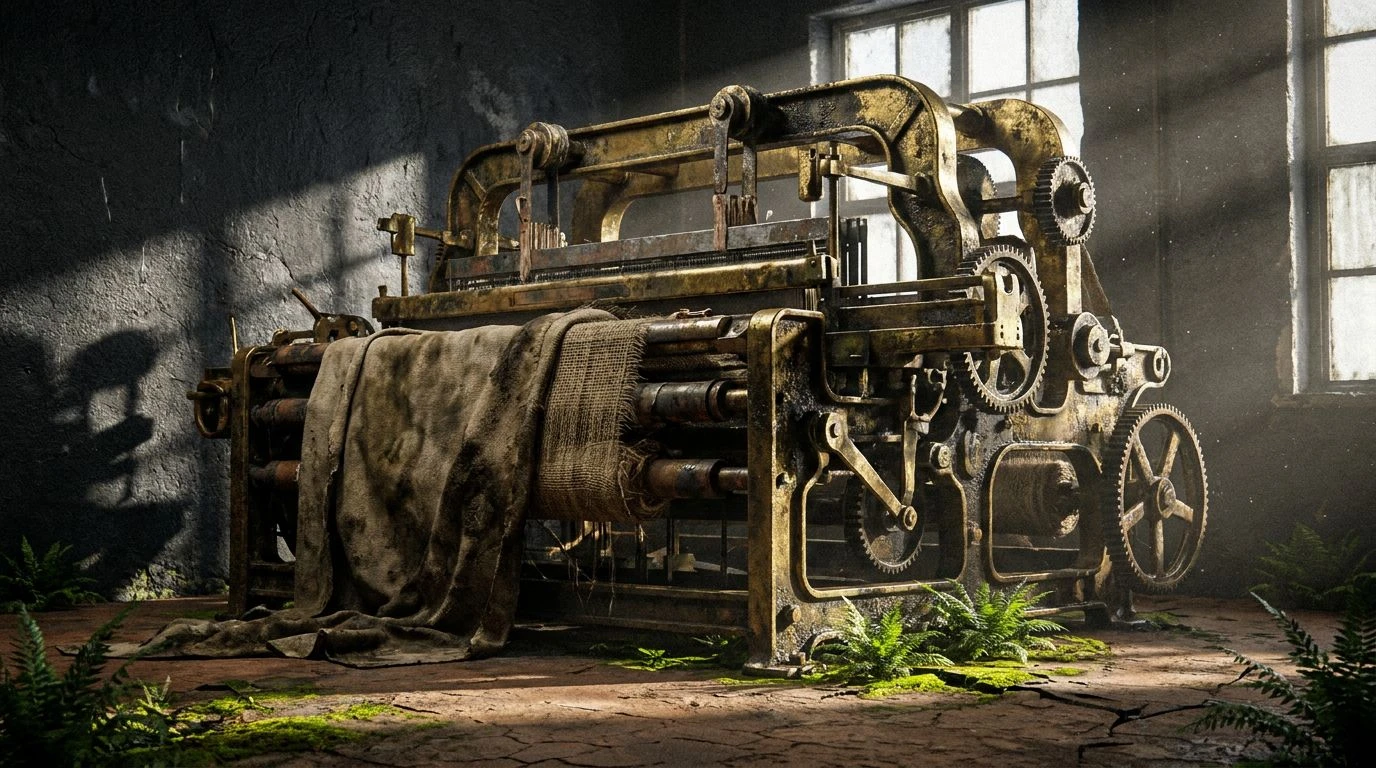
Within the spectrum of Factory Floor Flora, the pristine illusion of Bleached Cotton meets the heavy, inescapable shadow of Cast Iron. This tension mirrors the reality of modern ethical manufacturing, where clean ideals must operate heavy, oil-stained machinery. The presence of Machine Oil Brown brings an unapologetic grit to the visual space, replacing polite neutrals with the dark, rich soil of a working factory. It grounds the viewer in the physical effort of production. Against this heavy, greasy dark shade, Muslin Dust offers a soft, fibrous relief, reminding us of unspun fibers waiting in the warehouse. Yet, the sudden, striking interruption of Sprouting Neon slices through the dust and grease. This bright shock represents new, vital growth forcing its way through the cracks of a concrete floor. It shows that environmental responsibility in fashion is not passive or quiet; it is a fierce, living pulse that survives and thrives amidst heavy industrial weight.
Furnace and Fiber 🧶
A working textile mill is a place of heat, motion, and constant friction, a reality beautifully captured by Furnace and Fiber. The aggressive heat of Safety Valve Red and Molten Ember flashes against the absolute darkness of Soot Black, creating a visual rhythm that feels like massive engines firing in sequence. This is the temperature of transformation. Grounding this fiery energy is Rusted Gear, a deep, worn brown that tells a story of time, moisture, and relentless use. It is a color of experience, perfect for conveying the authenticity of a brand that builds clothing to last through decades of wear. Softening the industrial fire, Raw Flax provides a creamy, breathable surface, acting as a resting place for the eye. The unexpected arrival of Lichen Spore and Deep Evergreen introduces the forest to the factory. These greens cling to the edges of the warm browns and reds, proving that organic life can wrap around the iron and steel of human industry, reclaiming the mechanical world with quiet, persistent growth.
Gilded Concrete 🏗️
Moving away from the heat of the furnace, Gilded Concrete settles into the cool, pragmatic shadows of an old manufacturing warehouse. Weathered Cement establishes a stoic, unbothered foundation, setting a mood of quiet endurance. Over this gray expanse, Worker's Ochre shines like a warning stripe on a factory floor or a hard hat catching the morning sun. It brings a flash of human labor and industrial utility to the visual narrative. Unbleached Wool serves as the organic counterweight, offering a creamy, textured softness that smells faintly of sheep and lanolin, reminding the viewer of the animal origins of true sustainable apparel. The deep, heavy anchor of Obsidian Slag adds a necessary gravity, pulling the lighter colors down into the dirt where they belong. Piercing through the gray and black is Industrial Moss, a vibrant green that feels like rainwater pooling in a neglected corner of the yard. Together, these tones create a sophisticated, utilitarian atmosphere that respects the cold reality of construction while celebrating the organic matter that flows through it.
Loom and Timber 🪵
The colors of Loom and Timber smell of freshly cut wood and old iron. Chalk Dust offers an imperfect, chalky white that refuses to be completely sterile, serving as a backdrop for the deep, historical weight of Mahogany Wood. This rich, reddish-brown speaks of ancient forests and sturdy, generational craftsmanship. It is the color of the massive wooden beams that hold up the roof of an ethical garment factory. Cardboard Carton introduces a familiar, recyclable utility, grounding the palette in the everyday logistics of shipping and packaging. The golden warmth of Sunlit Straw pours over the scene like late afternoon light through a dusty warehouse window, bringing a sense of hope and natural energy to the heavy wood and iron. Galvanized Steel cools the space with a breath of metallic gray, while Patina Copper suggests that the machinery here is old, well-loved, and exposed to the elements. This palette constructs a visual space that feels both profoundly historic and immediately practical, honoring the materials of the earth by leaving their natural textures exposed.
Reclaimed Workshop 🛠️
Reclaimed Workshop offers a dark, protective atmosphere, a space where raw materials are transformed without hiding the mess of creation. Midnight Asphalt swallows the light, creating a deep, cavernous background that feels like an endless night outside a busy factory. Muddy Canvas provides a thick, tactile taupe that feels like a heavy-duty apron stained with soil and dye. It is the ultimate expression of hardworking fabric, rejecting the fragile nature of clean white cotton. Oxidized Clay brings a jolt of burnt, rusty orange to the darkness, acting as the rust on a neglected tool or the rich iron of desert dirt. This orange creates a sudden warmth, a spark of creative fire in the dark room. Thriving Fern and Oxidized Brass cool the fire slightly, bringing in the damp, ancient feeling of a forest floor. The fern green breathes life into the heavy dirt and asphalt, showing that ecological responsibility requires getting our hands dirty. It tells a story of manufacturing that does not pave over the forest, but rather builds its machinery directly into the soil, letting the mud and leaves become part of the final garment.
The visual language of ethical fashion must grow up and face the grime of its own existence. By leaving behind the fragile, untouched whites that dominate the industry, we invite a more honest conversation about what it takes to clothe ourselves. Earthy browns, heavy blacks, and raw, unbleached creams do not apologize for the machinery, the sweat, or the soil. They celebrate the physical reality of production. These colors construct a world where heavy industry and natural ecology are no longer mortal enemies, but partners engaged in hard, necessary labor. They remind us that true care for the earth requires stepping out of the sterile showroom and walking straight into the dirt.