Electric Blue Color Palettes in Modern Tech Branding
· 5 min readWhen we observe the visual landscape of modern technology hubs, a striking pattern emerges: a near-universal fixation on intensely concentrated, luminous blues. From a perceptual standpoint, this phenomenon is not arbitrary. The human visual system processes these high-octane wavelengths as signals of artificiality and alertness. Unlike earth tones that ground us in the natural world, this specific frequency operates at the edge of our evolutionary visual diet. It acts as a cognitive trigger for the synthetic, the advanced, and the futuristic. Designers have intuitively adopted this chromatic frequency to communicate a forward-moving momentum, transforming abstract concepts of machine learning and algorithmic processing into a visceral, optical shock. This visual obsession speaks to a broader psychological need to make the invisible architecture of our modern era visibly tangible.
Synaptic Spark ⚡
The Synaptic Spark palette explores the tension between biological origins and synthetic futures. When the eye encounters the vivid sting of Acid Spore and Bioluminescent Lemon alongside the depth of Obsidian Void and Midnight Moss, it experiences a simulation of natural bioluminescence. Yet, it is the piercing arrival of Cobalt Acceleration and Ionized Sky that truly activates the visual field. These intense blues cut through the murky, naturalistic greens and yellows, mimicking an electrical current running through a biological substrate. This high-contrast interaction captures the exact psychological state technology brands wish to project: a sudden, brilliant flash of artificial intelligence emerging from raw, unstructured data. The deep coolness of Deep Ocean Trench provides a stabilizing background, ensuring the brighter, highly active wavelengths maintain their visual shock value without overwhelming the observer.
Deep Mind Current 🧠
Deep Mind Current offers a direct study in chromatic temperature and depth perception. By anchoring the visual experience in Absolute Zero and Mariana Abyss, the palette creates an optical void, a dark expanse that mimics a screen glowing in a darkened laboratory. From this abyssal baseline, Frosted Titanium acts as a conductive metal, bridging the gap between absolute darkness and the extreme luminosity of Plasma Cyan and Hyperdrive Blue. The perceptual mechanics here rely on simultaneous contrast. The darker the background, the more the high-energy blues appear to generate their own internal light source. Agencies deploy this specific visual architecture to trigger feelings of boundless spatial depth and relentless computational speed, signaling an environment where complex problems are processed in milliseconds by unseen, glowing architectures.
Neural Network 🌐
In the Neural Network collection, we observe how a dominant blue interacts with equally aggressive wavelengths across the spectrum. Ultramarine Pulse does not stand alone; it vibrates intensely against the optical disruption of Fluorescent Chlorophyll and Ultraviolet Flare. Human vision struggles slightly to focus on these wildly differing wavelengths simultaneously, creating a subtle, shimmering effect on the retina known as chromostereopsis. This optical vibration translates psychologically into a sense of raw, kinetic energy and restless innovation. The stabilizing anchors of Carbon Lattice, Tungsten Ash, and Oxidized Lead provide necessary visual rest areas, preventing sensory fatigue. Through this precise calibration of extreme highs and muted lows, designers construct a visual metaphor for a hyper-connected, high-bandwidth environment, mirroring the non-stop data transmission of modern tech infrastructure.
Quantum State ⚛️
Quantum State strips away competing hues to investigate the raw power of the blue spectrum against an achromatic baseline. The human eye is incredibly sensitive to the stark transitions between Vantablack, Slate Monolith, Concrete Mist, and Photon White. This grayscale gradient establishes a clinical, highly controlled laboratory environment. When Liquid Nitrogen and Isotope Blue are introduced into this austere setting, their impact is mathematically precise and overwhelmingly stark. Without warm colors to distract the viewer, these cold, high-frequency wavelengths dominate our visual processing. Psychologically, this triggers associations with sterile cleanrooms, quantum computing arrays, and rigorous scientific accuracy. The blue here feels less like a color and more like a concentrated laser beam cutting through a fog of neutral data, directing focus exactly where the architect of the experience intends.
Thermal Optics 🔭
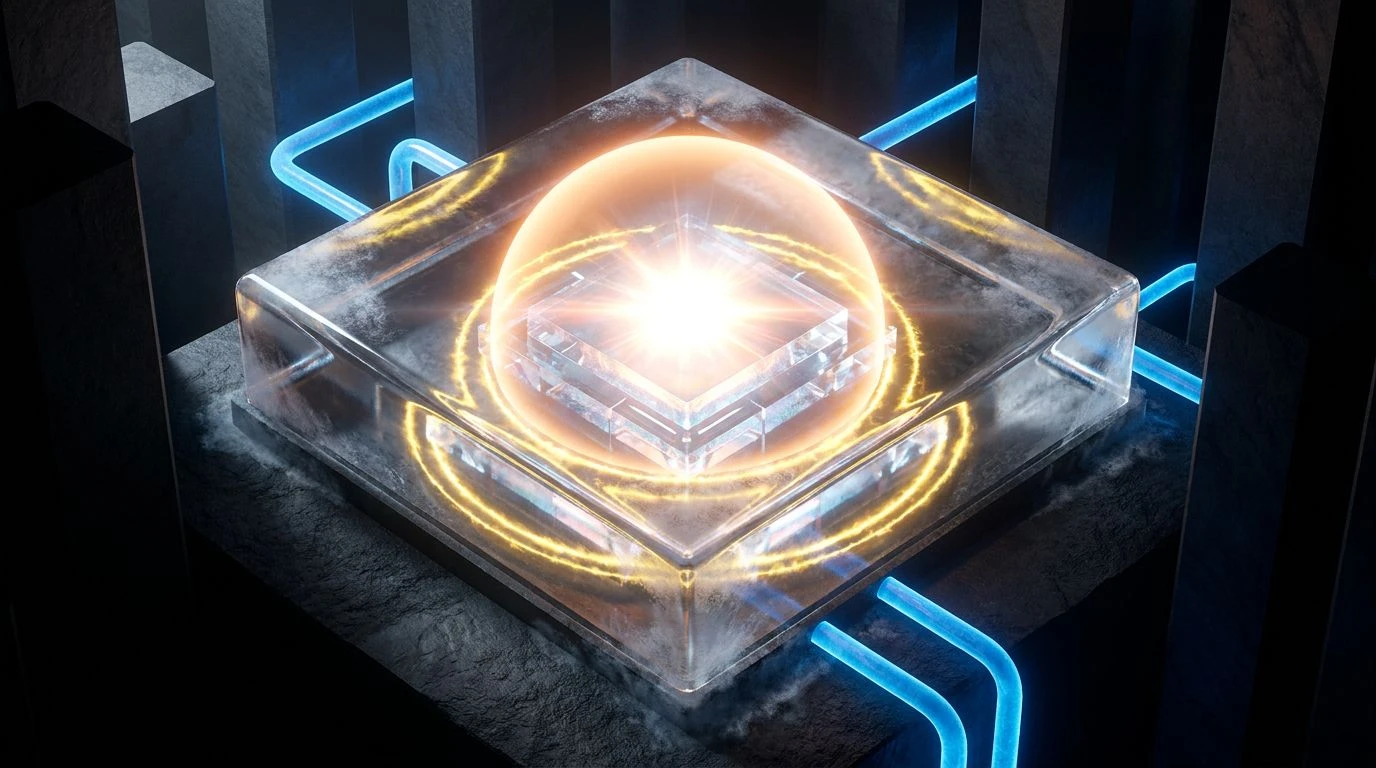
The Thermal Optics sequence operates on the powerful principle of complementary contrast, pitting the extreme heat of the solar spectrum against the artificial chill of technology. The retina processes Solar Flare, Apricot Corona, and Supernova Yellow as advancing colors, wavelengths that seem to physically push forward toward the observer. Conversely, Stratosphere Blue and Frost Haze are receding signals, creating a spatial illusion of depth. When these forces meet over a structural framework of Graphite Dust, Basalt Shadow, and Event Horizon, the result is an optical engine of maximum friction. Creative minds utilize this specific push-and-pull mechanism to represent the conversion of raw, volatile energy into directed, intelligent systems. The blue in this context acts as the necessary coolant, the sophisticated technological containment field that masters and directs the explosive creative heat.
Our perceptual response to high-intensity blues reveals much about how we process the concept of progress itself. These chromatic sequences are not merely decorative choices; they are calibrated optical tools designed to trigger specific neurological responses associated with alertness, artificiality, and boundless space. By manipulating contrasting temperatures, extreme light values, and complementary tensions, visual architects effectively hack our visual system to make the intangible concepts of code and computation feel visceral. As our daily existence becomes increasingly mediated by screens and algorithms, this visual vocabulary serves as the defining aesthetic signature of our technological era, transforming abstract ideas of the future into a striking, undeniable sensory reality.