'%3e%3cpath%20fill-rule='evenodd'%20clip-rule='evenodd'%20d='M51.1303%2019.2492C50.7278%2019.913%2050.1346%2020.4426%2049.3508%2020.838C48.5669%2021.2335%2047.6172%2021.4312%2046.5014%2021.4312C44.8208%2021.4312%2043.4367%2021.0216%2042.3492%2020.2025C41.2617%2019.3833%2040.6686%2018.2394%2040.5697%2016.7706H44.4253C44.4818%2017.3355%2044.6831%2017.7804%2045.0291%2018.1052C45.3751%2018.43%2045.8164%2018.5924%2046.3531%2018.5924C46.8192%2018.5924%2047.1864%2018.4653%2047.4547%2018.2111C47.7231%2017.9569%2047.8572%2017.618%2047.8572%2017.1943C47.8572%2016.8129%2047.7337%2016.4952%2047.4865%2016.241C47.2393%2015.9867%2046.9322%2015.7784%2046.565%2015.616C46.1978%2015.4536%2045.6893%2015.2594%2045.0397%2015.0334C44.0934%2014.7086%2043.3202%2014.3944%2042.72%2014.0907C42.1197%2013.7871%2041.6042%2013.3351%2041.1735%2012.7349C40.7427%2012.1347%2040.5273%2011.3544%2040.5273%2010.394C40.5273%209.50418%2040.7533%208.73448%2041.2053%208.08481C41.6572%207.43515%2042.2821%206.93731%2043.0801%206.5913C43.8781%206.24528%2044.7925%206.07227%2045.8235%206.07227C47.49%206.07227%2048.8141%206.46771%2049.7956%207.25861C50.7772%208.04951%2051.3315%209.13698%2051.4586%2010.5211H47.5395C47.4689%2010.0268%2047.2888%209.63483%2046.9993%209.3453C46.7097%209.05578%2046.3178%208.91102%2045.8235%208.91102C45.3998%208.91102%2045.0573%209.024%2044.7961%209.24997C44.5348%209.47594%2044.4041%209.80783%2044.4041%2010.2457C44.4041%2010.5988%2044.5207%2010.8989%2044.7537%2011.146C44.9867%2011.3932%2045.2798%2011.5944%2045.6328%2011.7498C45.9859%2011.9052%2046.4944%2012.1029%2047.1581%2012.343C48.1185%2012.6678%2048.9023%2012.9891%2049.5096%2013.3069C50.1169%2013.6246%2050.6395%2014.0872%2051.0773%2014.6945C51.5151%2015.3018%2051.734%2016.0927%2051.734%2017.0672C51.734%2017.8581%2051.5328%2018.5854%2051.1303%2019.2492ZM59.0242%206.3053V21.2829H55.4016V6.3053H59.0242ZM73.9409%206.3053V9.18642H69.8734V21.2829H66.2296V9.18642H62.2046V6.3053H73.9409ZM80.7438%209.18642V12.3218H85.8069V15.0546H80.7438V18.3806H86.4425V21.2829H77.1212V6.3053H86.4425V9.18642H80.7438ZM99.667%2016.0291V21.2829H96.0444V6.3053H101.913C103.692%206.3053%20105.048%206.74665%20105.98%207.62934C106.912%208.51204%20107.378%209.7019%20107.378%2011.199C107.378%2012.1311%20107.17%2012.9609%20106.753%2013.6882C106.337%2014.4155%20105.719%2014.9875%20104.9%2015.4042C104.08%2015.8208%20103.085%2016.0291%20101.913%2016.0291H99.667ZM103.692%2011.199C103.692%209.8855%20102.965%209.22879%20101.51%209.22879H99.667V13.1268H101.51C102.965%2013.1268%20103.692%2012.4842%20103.692%2011.199ZM120.092%2018.5501H114.478L113.546%2021.2829H109.732L115.219%206.41123H119.393L124.879%2021.2829H121.024L120.092%2018.5501ZM119.16%2015.7961L117.295%2010.2881L115.41%2015.7961H119.16ZM131.555%2018.5077H136.385V21.2829H127.933V6.3053H131.555V18.5077ZM143.337%209.18642V12.3218H148.4V15.0546H143.337V18.3806H149.035V21.2829H139.714V6.3053H149.035V9.18642H143.337ZM163.507%206.3053V9.18642H159.44V21.2829H155.796V9.18642H151.771V6.3053H163.507ZM177.449%206.3053V9.18642H173.382V21.2829H169.738V9.18642H165.713V6.3053H177.449ZM184.252%209.18642V12.3218H189.315V15.0546H184.252V18.3806H189.951V21.2829H180.629V6.3053H189.951V9.18642H184.252Z'%20fill='%23EEF0ED'/%3e%3cmask%20id='mask0_3101_7327'%20style='mask-type:alpha'%20maskUnits='userSpaceOnUse'%20x='0'%20y='0'%20width='27'%20height='28'%3e%3cpath%20d='M23.8328%200.759766H2.64808C1.18559%200.759766%200%201.94535%200%203.40785V24.5925C0%2026.055%201.18559%2027.2406%202.64808%2027.2406H23.8328C25.2952%2027.2406%2026.4808%2026.055%2026.4808%2024.5925V3.40785C26.4808%201.94535%2025.2952%200.759766%2023.8328%200.759766Z'%20fill='white'/%3e%3c/mask%3e%3cg%20mask='url(%23mask0_3101_7327)'%3e%3cpath%20d='M23.8328%200.759766H2.64808C1.18559%200.759766%200%201.94535%200%203.40785V24.5925C0%2026.055%201.18559%2027.2406%202.64808%2027.2406H23.8328C25.2952%2027.2406%2026.4808%2026.055%2026.4808%2024.5925V3.40785C26.4808%201.94535%2025.2952%200.759766%2023.8328%200.759766Z'%20fill='%23D8D8D8'/%3e%3cpath%20d='M13.2404%200.759766H0V14.0001H13.2404V0.759766Z'%20fill='%238C61FF'/%3e%3cpath%20d='M13.2404%2014H0V27.2404H13.2404V14Z'%20fill='%2336C3FE'/%3e%3cpath%20d='M26.4806%2014H13.2402V27.2404H26.4806V14Z'%20fill='%236592FE'/%3e%3cpath%20d='M26.4806%200.759766H13.2402V14.0002H26.4806V0.759766Z'%20fill='%236059F7'/%3e%3c/g%3e%3c/g%3e%3cdefs%3e%3cclipPath%20id='clip0_3101_7327'%3e%3crect%20width='190'%20height='28'%20fill='white'/%3e%3c/clipPath%3e%3c/defs%3e%3c/svg%3e)
'%3e%3cpath%20d='M23.8328%200.759521H2.64808C1.18559%200.759521%200%201.94511%200%203.40761V24.5923C0%2026.0548%201.18559%2027.2404%202.64808%2027.2404H23.8328C25.2952%2027.2404%2026.4808%2026.0548%2026.4808%2024.5923V3.40761C26.4808%201.94511%2025.2952%200.759521%2023.8328%200.759521Z'%20fill='%23D8D8D8'/%3e%3cpath%20d='M13.2404%200.759521H0V13.9999H13.2404V0.759521Z'%20fill='%238C61FF'/%3e%3cpath%20d='M13.2404%2013.9998H0V27.2402H13.2404V13.9998Z'%20fill='%2336C3FE'/%3e%3cpath%20d='M26.4809%2013.9998H13.2405V27.2402H26.4809V13.9998Z'%20fill='%236592FE'/%3e%3cpath%20d='M26.4809%200.759277H13.2405V13.9997H26.4809V0.759277Z'%20fill='%236059F7'/%3e%3c/g%3e%3c/svg%3e)
Retro Color Palettes Can Fix Social Media Stress Levels
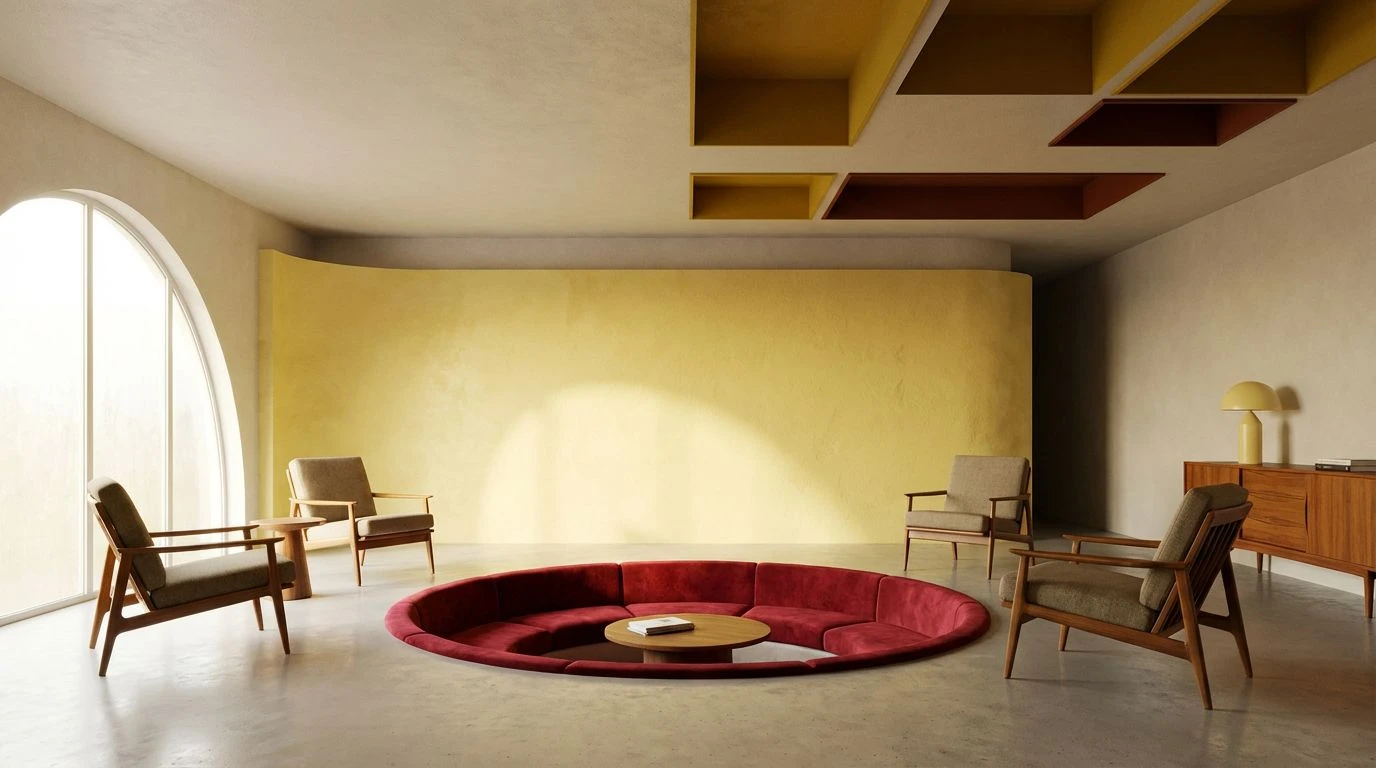
· 6 min readThe visual environment of the internet often operates at maximum intensity, flooding the optic nerve with high-contrast, blue-light dominant interfaces engineered to capture and capture visual attention. This constant physiological arousal takes a measurable toll on the nervous system, prompting a radical question: could the visual grammar of 1970s educational animation offer an antidote? During that era, animators relied on a specific spectrum of warm earth tones and creamy backgrounds. This was originally a physical limitation of the celluloid and paints available, which inadvertently produced a profoundly calming psychological effect. When a human observer views these moderate-intensity palettes today, the brain processes them through a lens of psychological safety. The slightly degraded, softer edges and earth-bound wavelengths reduce cognitive load, signaling to the brain that the environment is secure and predictable. Applying these specific chromatic profiles to modern digital spaces might shift human interaction away from a state of constant, low-grade alarm toward a psychologically grounded sense of community and mutual care, utilizing the neurobiology of color perception to lower the emotional temperature of our feeds.
Celluloid Sunrise 🎞️
The visual warmth of Celluloid Sunrise operates primarily through localized long-wave reflection, dominating the retinal response with soothing thermal associations. Crimson Oxide and Burnt Sienna sit firmly in the longer, lower-energy end of the visible spectrum, a range the human visual system processes as ecologically grounding, akin to clay or baked earth. When paired with Sunfaded Pale Lemon and Mustard Seed, the high-reflectance inputs simulate the analog glow of light projected through physical film. The Dust Warm Gray and Overcast Chalk act as perceptual buffers, lowering the overall contrast ratio. In a digital interface, replacing harsh stark whites with these specific desaturated midtones physically relaxes the ciliary muscles in the human eye. This reduction in physiological strain creates a virtual space where users feel sheltered rather than scrutinized. Designing a social feed around these specific wavelengths simulates the gentle, communal atmosphere of gathering around a projector screen, lowering defensive behaviors and encouraging measured, thoughtful communication.
Overhead Projector 📽️
In the realm of visual cognition, Overhead Projector introduces a fascinating interplay of complementary opponent colors, specifically tailored to avoid overstimulating the visual cortex. Kodachrome Orange provides a distinct, recognizable anchor, drawing the eye naturally without the alarming intensity of fluorescent digital reds. It finds a peaceful counterweight in Pastel Sky, a short-wavelength hue that appears softly muted by the inclusion of white and gray undertones, mimicking the chemical degradation of vintage cyan dyes. Surrounding these two anchors are Faded Marigold and Bleached Papyrus, which flood the visual field with moderate luminance. Human brains naturally associate this specific distribution of light and color with historical educational materials, triggering implicit memories of learning and cooperative discovery. Applying this exact chromatic arrangement to online platforms can actively defuse aggressive online interactions. By surrounding text and social exchanges with Mossy Umber and soft cream, the interface communicates an environment of shared knowledge and constructive play, subtly encouraging a mindset of collective problem-solving over individualistic posturing.
Saturday Morning Broadcast 📺
This selection recreates the distinct optical physics of a cathode-ray tube television warming up on a weekend morning. Saturday Morning Broadcast grounds the visual field with Cathode Black and Walnut Console, providing deep, anchoring shadows that give structure to the lighter elements. The eye is predictably drawn to Tangerine Glow and Toffee, wavelengths that stimulate positive emotional valences in psychological studies of color preference. What makes this combination particularly effective for reducing digital anxiety is the buffering effect of Warmed Parchment and Faded Lichen. These low-saturation, high-lightness shades fill the surrounding space, absorbing the visual intensity of the brighter orange and Static Blue. When implemented in user interface design, this specific balance of high-contrast structure and low-stress background colors reduces the mental fatigue associated with prolonged reading on backlit screens. A social network utilizing these precise colorimetric values would feel remarkably like an approachable, analog public square, signaling to the brain that the interactions within this space are low-stakes, familiar, and genuinely safe to explore.
Educational Programming 🚌
Humans possess an acute sensitivity to primary colors, a trait rooted deeply in our early developmental milestones. Educational Programming captures the specific visual diet of childhood learning materials, utilizing Persimmon, Chlorophyll Green, and Bright Cerulean. In standard modern contexts, primary arrays often feel aggressive or garish, but this group modifies the equation by anchoring the brights with Soft Beige and Cocoa Bean. Translating this to modern software interfaces produces a remarkable psychological phenomenon: it signals a return to a purely instructive, non-commercial era of media. The presence of Muted Slate and Primary Ultramarine creates a cooling backdrop that keeps the warmer, highly active brights from overwhelming the optic nerve. A digital community engineered around these specific wavelengths actively encourages an attitude of curiosity and forgiving participation. The visual cues mimic building blocks and construction paper, materials that communicate tactility and the freedom to make mistakes. A platform painted in these educational analog hues would naturally discourage the performative perfectionism that plagues contemporary internet culture, actively fostering authentic connections.
Analog Oscillator 🎛️
Moving slightly toward the synthetic experimentation of late-seventies electronic media, Analog Oscillator introduces higher frequency colors into the traditional warm vocabulary. Spearmint, Electric Azure, and Violet Wavelength occupy the shorter, higher-energy end of the visible light spectrum. In isolation, these colors might appear intensely modern, yet they are constrained mathematically by the surrounding Vanilla Bean and Ash Gray. This creates a perceptual grounding effect where the bright Coral Pink and Faded Magenta appear as temporary accents rather than structural dominance. The psychology of this specific palette deals directly with forward-looking optimism, simulating the bright phosphor trails on early computer monitors mixing with traditional paint pigments. In application for social connectivity tools, this unique distribution of luminance provides enough visual excitement to keep the user alert and engaged, while the heavy base of cream and ash prevents sensory overload. It constructs a visual environment that feels both progressive and intensely human, suggesting a space where technological advancement serves to protect and elevate community bonds rather than isolate the individual.
The perceptual architecture of an online platform dictates the psychological behavior of the humans navigating it. Through the precise application of these slightly muted, warm chromatic scales from past decades, software developers possess a mechanical method to lower the collective blood pressure of internet users. Viewing colors that mimic the physical constraints of celluloid film and early television broadcasting shifts the brain off high alert, promoting a state of parasympathetic rest. The bright but buffered orange pigments, the grounded earthy browns, and the low-contrast cream backgrounds function as environmental cues that signal safety, predictability, and shared humanity. Shifting the modern internet away from stark, blinding whites and hyper-saturated alert colors toward these developmentally supportive palettes offers a biological pathway to repairing online discourse. By simply changing the light frequencies emitted from our screens, we maintain the ability to construct digital environments that instinctively tell users they are welcome, safe, and part of a cooperative whole.